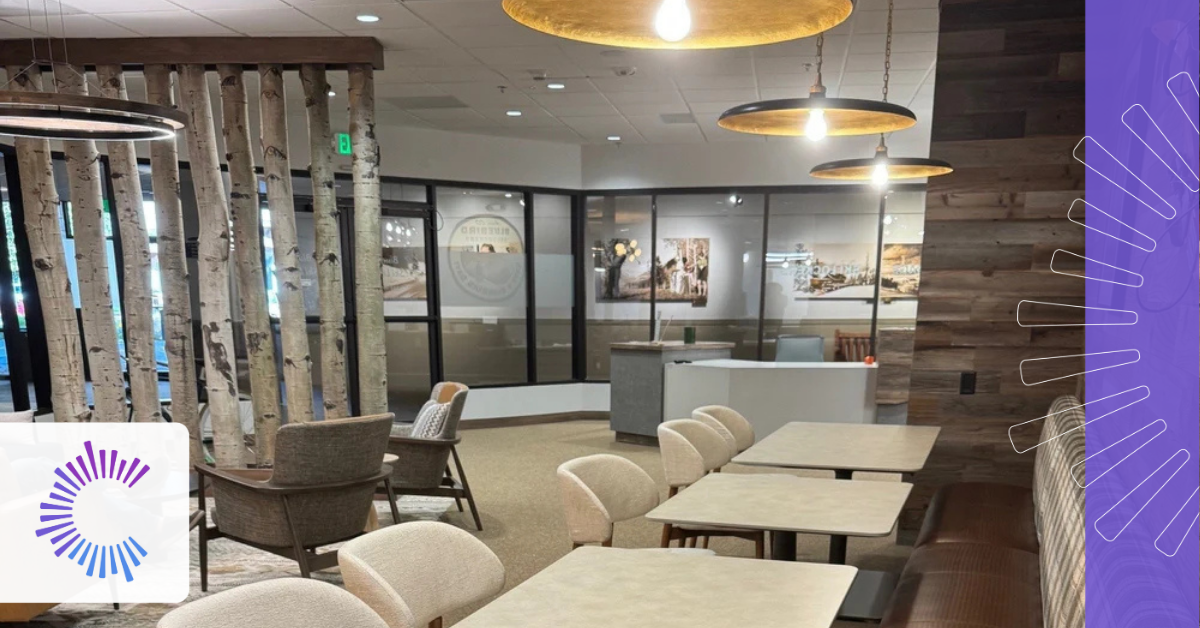
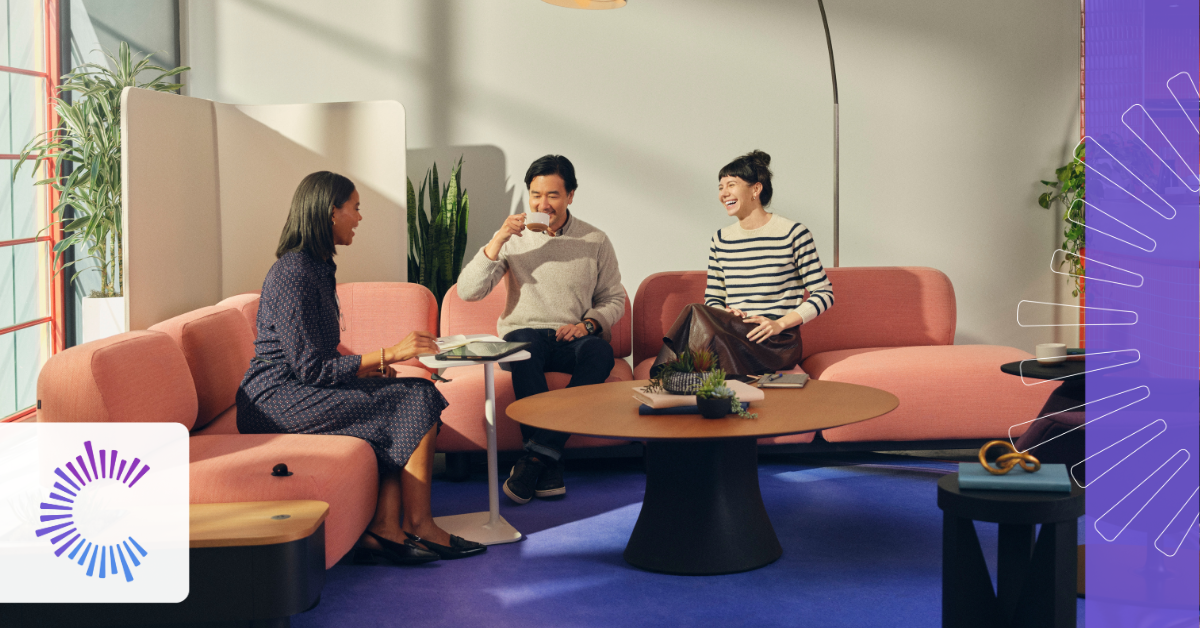
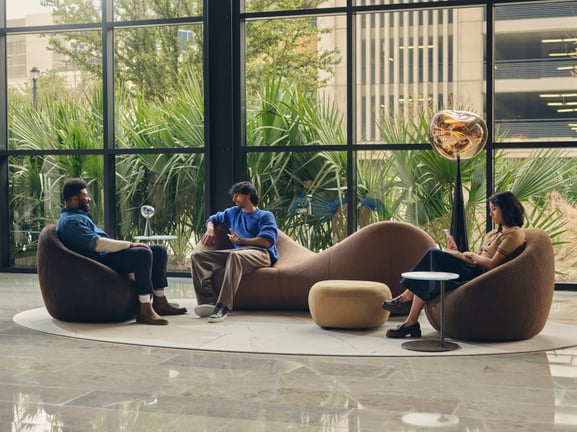
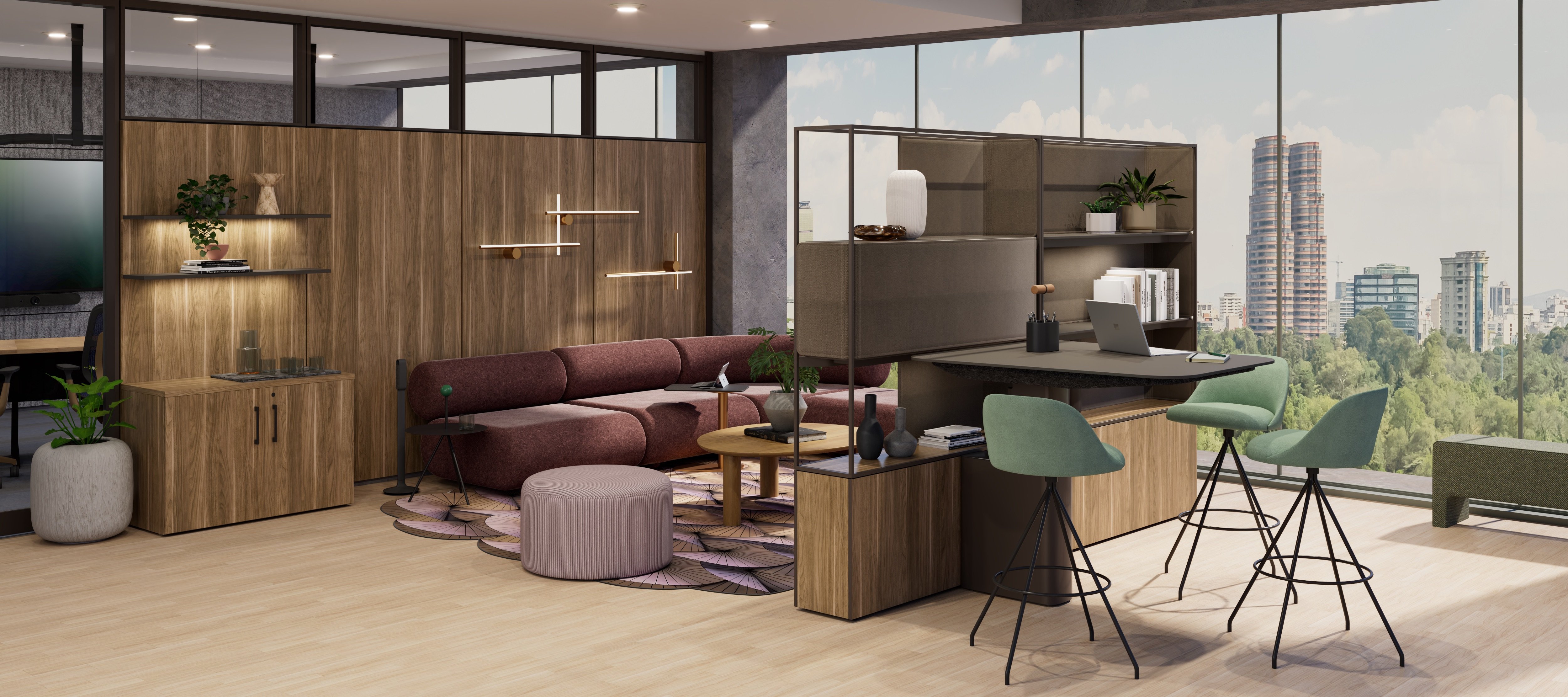

The nose-to-the-grindstone era is over. Employee wellbeing has shifted from a “nice to have” to a strategic priority. As organizations navigate hybrid work, talent retention, burnout and rising expectations for flexibility, corporate office environments must do more than provide desks and meeting rooms. They must support focus, comfort, inclusion and connection.
At Circadia, wellbeing begins with understanding how people actually use a space. By translating research into practical interior workplace solutions, Circadia helps leaders design environments that support healthier work patterns and more engaged teams.
Why Employee Wellbeing Starts with the Physical Environment
Workplace wellbeing is often discussed in terms of programs, benefits or company culture, but the physical environment plays an equally important role. Lighting, acoustics, ergonomics, spatial variety and access to restorative spaces all influence how people feel and perform throughout the day.
When these elements are intentionally designed, the office becomes a tool for reducing stress, supporting cognitive performance and encouraging healthier habits. When they’re overlooked, even the most well-intentioned wellness initiatives struggle to gain traction.
This is where workplace wellness design becomes essential. It connects evidence based insights with the realities of daily work, ensuring that wellbeing is embedded into the environment rather than added as an afterthought.
Don’t believe us? Think about how you feel at your favorite spa vs. somewhere like the DMV or the post office. The stark contrast in mood, aesthetics, and physical design perfectly illustrates why more companies are checking in on the fact that the physical environment sets the tone for how people feel at work.
Starting with Human Needs, Not Trends
A wellbeing‑centric office begins with understanding the people who use it. Circadia’s consultative process focuses on uncovering how employees move, collaborate and recharge throughout the day.
This discovery phase often reveals needs that aren’t obvious at first glance. For example, neurodiverse employees may require quieter zones with predictable sensory input, while hybrid teams may need flexible spaces that support quick transitions between virtual and in‑person work.
By grounding decisions in real behaviors and challenges, interior workplace solutions become more than aesthetic choices; they are tangible tools that support energy, focus and inclusion.
Key Elements of Healthy Office Design
Healthy office design is not defined by a single feature. It’s the combination of environmental factors working in concert to support physical and mental wellbeing, including:
1. Ergonomics That Reduce Strain and Fatigue
Ergonomic seating, height‑adjustable desks and properly positioned technology help reduce musculoskeletal strain. Circadia partners closely with manufacturers like Steelcase, utilizing their shared research to offer the best adaptable ergonomic support for a wide range of users.
2. Acoustic Control for Better Focus
Noise is one of the most common hurdles keeping your employees from reaching peak productivity. Acoustic panels, sound‑absorbing materials, sound-masking and enclosed focus pods help reduce distractions. Architecture products can create quiet zones that support deep work and neurodiverse needs.
3. Lighting That Supports Energy and Comfort
Natural light, adjustable task lighting and color‑temperature control can all improve alertness and reduce eye strain. Circadia’s workplace wellness design approach ensures lighting strategies align with employee preferences and logistical needs.
4. Spatial Variety for Different Work Modes
Employees need different environments for different tasks, including group collaboration, solo focus time, social connection and restoration. Modular furniture systems allow teams to shift layouts to suit their needs and the demands of the task at hand.
5. Materials That Promote Health and Cleanability
Low‑VOC materials, antimicrobial surfaces and flooring designed for durability and comfort contribute to a healthier environment. Circadia frequently incorporates resilient flooring systems that balance aesthetics, performance and long‑term value. Additionally, Circadia often brings the outside in with biophilic design elements and materials, elevating mood and overall wellbeing.

Designing for Neurodiversity and Psychological Safety
A growing number of organizations are recognizing the importance of designing for neurodiverse employees. Sensory‑friendly environments with balanced acoustics, adjustable lighting and access to quiet spaces help reduce cognitive overload and support sustained focus.
Psychological safety also plays a role. When employees feel comfortable choosing the environment that best supports their work style, they’re more likely to stay engaged and less likely to experience burnout. This is why corporate office interior design is critical to ensure the health of your team.
How Workplace Design Influences Engagement and Productivity
Research consistently shows that employees who feel supported by their environment are more engaged, more productive and more likely to stay with their organization.
Workplace wellness design can influence:
- Cognitive performance through reduced noise and better lighting.
- Physical comfort through ergonomic support and movement‑friendly layouts.
- Emotional wellbeing through access to restorative spaces.
- Collaboration quality through intentional spatial planning.
- Retention by creating an environment people want to return to.
- Acoustic pods and booths for quiet focus work.
- Modular workstations that adapt to changing team needs.
- Ergonomic seating that supports posture and reduces fatigue.
- Resilient flooring systems that improve comfort and reduce noise.
- Flexible meeting furniture that supports hybrid collaboration.
- Employee satisfaction and engagement.
- Space utilization patterns.
- Noise levels and acoustic performance.
- Ergonomic risk reduction.
- Quality of collaboration.
- Retention and recruitment outcomes.
When the office supports wellbeing, it becomes a destination rather than an obligation. The end result is a happier, healthier workforce.
Interior Workplace Solutions That Bring Wellbeing to Life
Circadia’s product line is intentionally curated to support wellbeing across multiple dimensions. A few examples include:
These solutions help organizations move from theory to practice, ensuring that wellbeing is embedded into the daily experience of work.
Measuring the Impact of Wellbeing‑Centric Design
Many executives and managers are surprised to find that wellbeing design is not abstract; it can be measured. Organizations often track:
Circadia helps clients connect design decisions to measurable results, reinforcing that healthy office design is both practical and attainable.
Designing a Corporate Office That Works for People
Employee wellbeing is no longer a trend; it’s a business imperative. By approaching workplace design with intention, organizations can create environments that support focus, comfort and connection.
"Imagine what a workplace could do if it was designed in a way to support and promote the best possible human experiences surrounding the notion of work: community, shared purpose, inspiration, knowledge transfer, productivity in support of improvement. A well-designed workplace can boost culture and connection, providing employees with a place to be proud of and an organization to grow with."
Judith Shuey, VP of Design at Circadia
Circadia’s expertise in corporate office interior design ensures that wellbeing is not just a design aspiration but a lived experience. Through research‑driven insights, thoughtful product selection and a consultative approach, Circadia helps organizations build offices where people feel energized, supported and ready to do their best work.
If you’re exploring how to bring wellbeing into your next workplace project, Circadia is ready to help you design a space that truly works for your people. Contact us today to get started.